
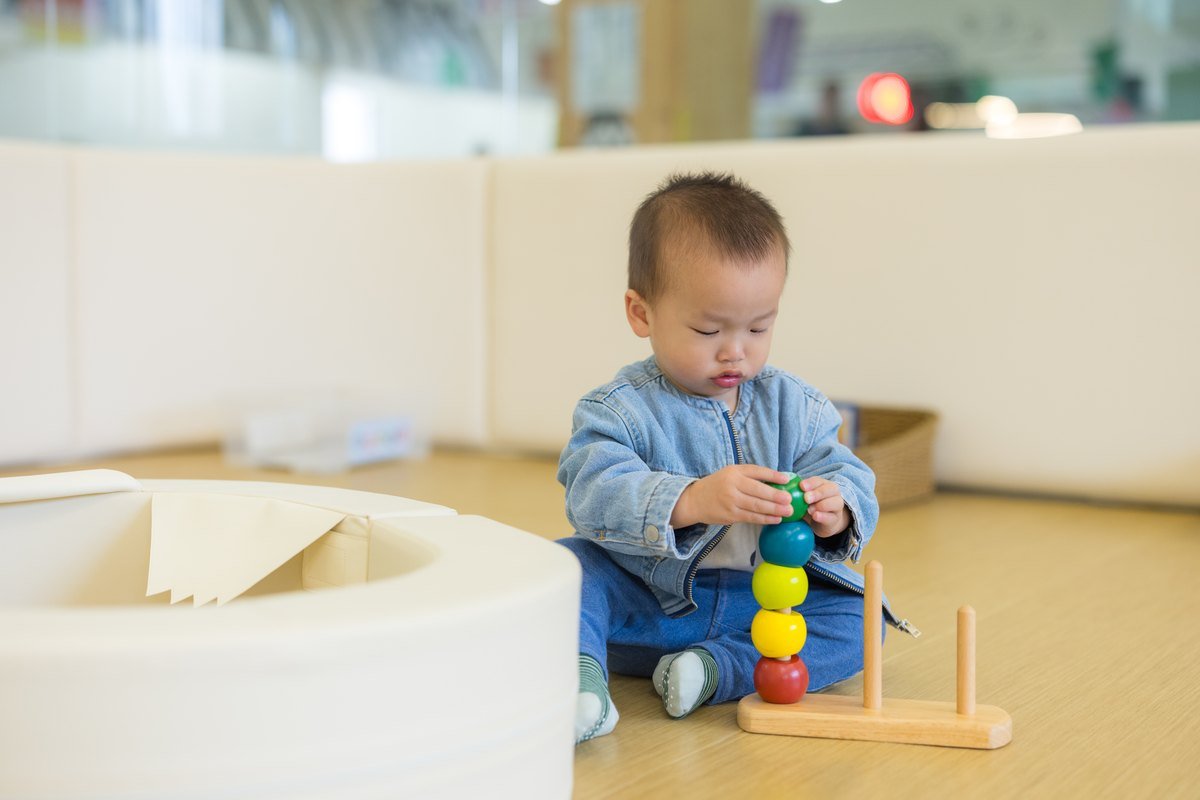
Most fine motor skills activities for toddlers are already happening in your house, several times a day, and nobody is calling them activities. A child pinching a bit of rice off her plate. A boy pressing a lid onto a steel dabba until it clicks. Somebody’s small hand closing around a crayon the wrong way and dragging a furious line across a wall you painted last year.
None of it looks like development. It looks like mess. But the hand is one of the places where the growing brain does its most visible work, and the ordinary business of scribbling, stacking and spoon-feeding is where a great deal of that work gets done.
This is a practical guide to what those small hands are actually building — what fine motor skill predicts later on, what is reasonable to expect between one and five, twelve things you can do with what is already in your kitchen, and how a scribble slowly becomes handwriting.
What fine motor skills actually predict
Fine motor skill is the control of the small muscles — the hand, the fingers, the wrist, and the eye that guides them. Gross motor is running and climbing; fine motor is the pincer grasp that lifts a single peanut, the two hands that hold a bowl steady while a spoon goes in, the wrist that turns a key.
Here is the part that surprises most parents. When researchers follow children over years, early fine motor ability turns out to be one of the better predictors of how school goes later — not because holding a pencil is academic, but because of what has to be in place before a hand can do precise work.
To thread a bead, a child has to hold a goal in mind, ignore the more interesting thing on the left, tolerate the frustration of missing, and try again slightly differently. Those are the capacities the Harvard Center on the Developing Child groups under executive function — the brain’s air-traffic-control system. Fine motor play is executive function practice wearing a disguise.
It also feeds directly into independence. A child who can manage buttons, a spoon and a zip is a child who needs less help, and needing less help does something quiet and large to how a three-year-old feels about herself.
So when you are tempted to take the spoon back and just feed her faster — and every parent is tempted, especially at 7.40 on a school morning — it helps to know what you are taking back along with it.
Fine motor development by age: one to five
Read what follows as a direction of travel, not a timetable. Children arrive at these things in their own order and their own months, and the range of normal is much wider than any chart suggests.
12 to 18 months
The pincer grasp — thumb and index finger meeting — is becoming reliable. She feeds herself small pieces, bangs two objects together, puts things into a container and tips them out again roughly four hundred times. She may hold a crayon in her fist and make marks. Stacking two or three blocks is a real achievement here.
18 months to 2 years
Towers get taller — four, five, six blocks. A spoon starts making it to the mouth with some of its contents still on board. She turns the pages of a book, though often two or three at a time. Scribbling becomes deliberate: she is watching the line appear, not just moving her arm.
2 to 3 years
The grip starts to shift off the fist and onto the fingers. She can thread large beads, unscrew a loose lid, pull off her own chappals, and copy a vertical line and then a circle. Playdough gets rolled and pinched rather than only squashed. Feeding is mostly self-managed, with a reasonable amount landing on the floor.
3 to 4 years
Scissors enter the picture — snipping first, then cutting along a line. She can draw a recognisable person, usually a head with legs coming straight out of it. Buttons, if they are large, become possible. She can pour water from a small jug into a glass and be genuinely pleased about it.
4 to 5 years
A proper tripod grip settles in for most children. She copies shapes, writes some letters, cuts out a shape, manages most of her own dressing, and can use a fork and spoon together. The hand is now doing what school will shortly ask of it.
If something here makes you uneasy — a child who avoids using one hand, who cannot manage a spoon well past two and a half, who gets so frustrated at small-hand tasks that she will not attempt them — that is worth a closer look, not because something is wrong, but because knowing beats guessing.
12 fine motor skills activities for toddlers, from your own kitchen
None of this needs buying. The kitchen is the best-stocked fine motor lab in the house. The first few are pincer grasp activities for the very youngest; the later ones add wrist control and two hands working together.
- Transferring dal between two bowls. Start with a hand, move to a spoon, then to tongs. Builds pincer grasp, then wrist control.
- Peeling garlic. Fiddly, satisfying, genuinely useful. Two- and three-year-olds love being given a real job.
- Tearing coriander and curry leaves. Two hands doing different things at once — the beginning of bilateral coordination.
- Lids and containers. A tray of steel dabbas with their lids mixed up. Matching and twisting in one go.
- Threading on a shoelace. Large beads, pasta shapes, or rings. The classic eye-hand task.
- Rolling and pinching atta. Give her a small ball of dough beside you while you cook. Hand strength, and she is part of the kitchen.
- Tongs and cotton balls. Moving puffs from one katori to another. Looks pointless; strengthens exactly the muscles a pencil needs.
- Squeezing a sponge. Water from one bowl to another, or wiping her own table. Grip strength plus a sense of contribution.
- Pouring rice or water. Small jug, small glass, tray underneath. Controlled release is a skill of its own.
- Stacking and nesting. Steel tumblers, not just toy blocks. Judging size and placing with care.
- Sorting by colour or shape. Buttons, beans, bottle caps into an ice tray — supervised, and away from the under-threes who still put everything in their mouths.
- Sticker peeling. Getting a sticker off its backing is surprisingly hard, and children will do it for twenty minutes.
A few things make all twelve work better. Sit alongside rather than opposite, so she can copy your hands. Say what she is doing rather than how well she did it. Let her finish badly instead of finishing it for her. And keep the sessions short — five focused minutes beats a reluctant thirty.
If you want these matched to your child’s exact age rather than picked at random, the activity library is organised that way. For younger siblings still under a year, the earlier guide to brain-building activities for babies covers the six-to-twelve-month version of the same idea.
From scribble to writing
There is a temptation, around age three, to skip ahead. Worksheets appear. Relatives ask whether he can write his name yet. Somebody’s daughter down the road is apparently already doing cursive.
It is worth resisting, and here is why. Handwriting sits on top of a stack: shoulder stability, then wrist control, then finger separation, then grip, then letter formation. A child pushed to the top of the stack before the lower parts are built will grip too hard, tire quickly, and come to dislike the whole business. The scribbling phase is not a delay before writing. It is the foundation of it.
The stack is also built socially, not in isolation. A child learns most when an adult responds to what she is already doing — what Harvard calls serve and return. She holds up her scribble; you look at it and say something about it; she goes back and makes another. That loop does more than any worksheet.
Vertical surfaces help enormously, and almost nobody uses them. Tape paper to a wall, or let her draw on a window with washable crayons. Working upright builds the shoulder and wrist strength that a table cannot, and it is the single easiest change most families can make.
Structured creative work helps too, which is the thinking behind Artsy Kids — art, craft and sensory play arranged so that fine motor control builds in a sensible order rather than by accident.
Questions parents ask about fine motor skills
What are fine motor skills, in simple terms?
The small, precise movements of the hands, fingers and wrists — and the eye that guides them. Picking up one pea, turning a page, doing up a button. Gross motor moves the whole body; fine motor does the detailed work.
At what age should a toddler hold a pencil properly?
A mature tripod grip usually settles between four and five. Before that, a fist grip and then a clumsy finger grip are normal, necessary stages rather than habits to correct. Pushing a child into a “correct” grip before the hand is ready produces a tight, tiring one.
How can I improve my toddler’s fine motor skills at home?
Give small hands real, everyday jobs rather than exercises — the twelve above are a place to start. Short and frequent beats long and formal: five focused minutes a day does more than a weekend session.
My two-year-old still cannot use a spoon well. Is that a problem?
At two, plenty of children are still messy with a spoon and most sort it out over the following year with practice alone. What matters is the pattern rather than the mess: a child who avoids using one hand, or who gets so frustrated that she stops trying, is worth a closer look.
The long view
What all of this comes down to is unglamorous: give small hands real things to do, and stay out of the way while they do them badly for a while.
That principle is the same one underneath everything we build. Brainy Early Years works with families through the first thirty months, when the foundations of grasp, coordination and attention are being laid; Brainy Indigo Connect is the thread that keeps the journey connected, so that what you noticed at fourteen months is still in view at three. Develop the brain first. Everything else follows.
If you would like to see this in practice rather than read about it, come and visit us. Our Coimbatore centre runs sessions where you can watch how these skills are built, ask questions about your own child, and leave with activities matched to where she actually is. Book a visit — we would be glad to have you.