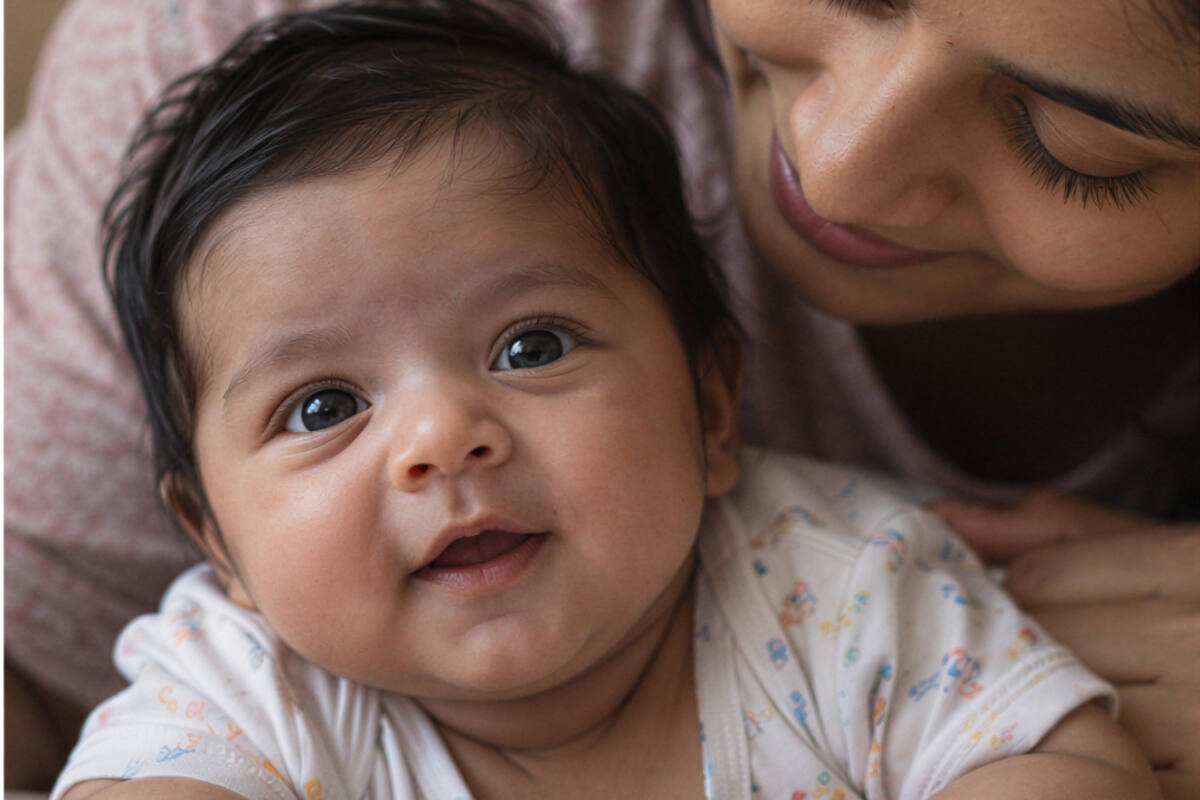
If your baby arrived early, someone in the NICU has probably said the words kangaroo care for premature babies to you, perhaps while handing you a wrap and pointing at a chair. It can feel like a small, almost too-simple request when so much around you is beeping and blinking. Yet this quiet practice, holding your baby skin to skin against your chest, is one of the most valued things a family can do for a preterm baby, and it asks for nothing except your presence.
This guide explains what kangaroo care is, what research says about the brain and bonding, how to do it safely at home, why dads and grandmothers are just as welcome, and what gentle steps can follow. It is not medical advice and it will not diagnose anything. It is meant to help you feel steady.
What kangaroo care is, and where it came from
Kangaroo care, also called kangaroo mother care or skin-to-skin contact, means holding a baby, dressed only in a nappy (and perhaps a cap), upright against a parent’s bare chest, with a blanket or wrap over both of you. The baby’s ear rests near your heartbeat. That is the whole technique.
The idea began in Bogotá, Colombia, in the late 1970s, when crowded hospitals had too few incubators for tiny babies. Doctors asked mothers to carry their babies against their skin, much as a kangaroo carries a joey, and noticed that the babies stayed warmer, fed better and did well. It has since spread to NICUs around the world, including many in Indian hospitals, and the World Health Organization now treats it as an important part of caring for small and preterm babies. You can read more in the WHO’s overview of preterm birth and the care that helps.
Many Indian families already know this instinctively. Grandmothers have long held new babies close, wrapped in a soft cotton cloth, on the chest or shoulder. Kangaroo care is that same instinct, with a few safety habits added.
What research says about brain, bonding and stability
It helps to know why the NICU team keeps encouraging you. Studies on skin-to-skin contact with preterm babies point to several benefits, and none of them are about doing anything perfectly.
- Steadier body systems. Babies held skin to skin tend to keep their temperature, heart rate and breathing steadier, because your body acts as a gentle, living regulator.
- Calmer stress levels. Skin contact seems to lower stress for baby and parent, and babies often sleep more deeply, which a growing brain needs.
- Easier feeding. Being close to the breast supports milk supply and gives a baby practice at rooting and latching, though bottle- or tube-fed babies benefit from the closeness too.
- Stronger bonding. Hours of closeness help parents learn their baby’s cues, and that growing confidence matters as much as anything on a chart.
For the brain specifically, think of kangaroo care as the earliest form of what the Harvard Center on the Developing Child calls “serve and return”: the small back-and-forth exchanges of touch, sound and warmth that build the architecture of a baby’s brain. Your heartbeat, your voice and your skin are the first experiences your baby’s brain organises itself around. Nothing needs to be bought, and every hour counts.
How to do kangaroo care for premature babies safely at home
In the NICU, nurses will guide you, position your baby and watch the monitors. Once you are home, the same principles apply. Please follow the advice of your own NICU or paediatric team, who know your baby’s weight, oxygen needs and feeding plan.
- Choose a calm moment. Pick a time when your baby is awake or lightly sleeping, ideally before or between feeds, and when the room is quiet and warm.
- Dress your baby simply. A nappy and a small cap or soft cloth on the head is enough. Wear a front-opening top or wrap so your chest is bare.
- Position upright and secure. Place your baby tummy-down on your chest, head turned to one side, chin slightly lifted so the airway stays open, hips tucked in like a frog. Cover both of you with a blanket or wrap that holds your baby firmly against you.
- Stay awake and watchful. The baby’s face should always be visible, nose and mouth clear, colour pink, breathing regular. If you feel very sleepy, hand your baby to a family member or place the baby in the cot.
- Give it time. Aim for sessions of an hour or more where you can, so your baby completes a full sleep cycle. Even shorter sessions help, and it is fine to build up slowly.
- Keep it smoke-free and fragrance-free. Avoid strong perfumes, incense smoke, and kitchen smoke on your clothes. A baby’s nose is sensitive.
If your baby seems unusually pale, floppy, breathes with effort or has pauses in breathing, stop, place the baby safely on a firm flat surface and contact your doctor or the NICU team right away. Trust your instinct, as you know your baby best.
Fathers and grandparents can do it too
One of the loveliest things about kangaroo care is that it is not only for mothers. After a caesarean delivery or a tiring recovery, a father’s chest is a wonderful place for a baby, and many NICU nurses encourage dads to take turns. Babies recognise a father’s voice and warmth quickly, and it gives fathers a real, hands-on role at a time when they can feel helpless.
Grandmothers and other close family can help as well, as long as they are well, have washed their hands and follow the NICU’s guidance. In joint families, where there are many hands and many opinions, kangaroo care gives everyone a meaningful job. A simple rota, with a quiet corner, a comfortable chair and a clean cotton wrap, lets each person have a turn and gives the mother time to rest and eat.
If a relative worries that holding the baby so much will “spoil” him, you can gently say that for a preterm baby, closeness is care, and not a habit to be avoided. The research is firmly on your side.
Beyond kangaroo care: next steps in gentle stimulation
As your baby grows stronger, skin-to-skin time can gradually share space with other gentle experiences. These all follow your baby’s corrected age, counted from the due date, and your baby’s cues.
- Talk and sing softly. Lullabies in Tamil, English or both are lovely. Your voice is the most familiar sound your baby knows.
- Short, calm tummy time. Once your doctor says it is fine, begin with a minute or two on your chest, then move to the floor. Our guide to tummy time for babies explains how to build it up gently.
- Gentle eye contact. A face about 20 to 30 centimetres away is just the right distance, and a few seconds is plenty.
- Watch for signs of overload. Looking away, hiccups, a fussy face or sudden stiffness mean “too much for now”. Pause and go back to cuddling. Less is often more.
It also helps to keep a simple note of what your baby enjoys, such as a favourite song, a calming position or a good time of day. Over months, this small record becomes a picture of your baby’s progress, and a calmer way to track development than comparing with the neighbour’s child. Families in our programmes sometimes use the Child Development Snapshot for this, and within Brainy Early Years, Brainy Indigo Connect is the thread that keeps the journey connected between hospital, home and the early years that follow.
Most of all, remember this: there is no wrong way to love a small baby. The hours you spend with your baby against your chest, quietly breathing together, are building more than you can see. You are doing something important just by being there.
Ready for the next step? Explore age-matched activities in the Activity Library.