Preschool readiness checklist — it is one of the most searched phrases by parents of two- and three-year-olds, and it is almost always searched late at night, just after somebody said something. A neighbour mentioning that admissions have opened. A cousin whose daughter joined playschool at two. A relative asking, gently or not so gently, whether you are leaving it a bit late.
So let us begin with the reassuring part. Readiness for preschool is not a date, and it is not a syllabus. Your child does not need to know the alphabet, count to twenty, or write her name. What she needs is a handful of ordinary, everyday capabilities — being able to part from you and recover, to make a need known, to be curious about another child — and nearly all of them are already growing at home, in the middle of perfectly normal life.
What follows is what readiness actually looks like between two and a half and three and a half: the seven signs worth watching, the things parents worry about that turn out not to matter, and a calm eight-week way to prepare.
Readiness is development, not age
In India the question nearly always arrives as an age question. Playschool at two? Nursery at three? LKG at three and a half or four? Every school seems to have a slightly different cut-off, and the cut-offs move.
It helps to know that those dates are administrative, not developmental. They exist so that a school can organise classes, not because something switches on inside a child at thirty-six months. Two children born in the same week can be six months apart in what they can manage in a room full of other children, and both of them are perfectly fine.
What actually decides whether the first few weeks go well is a cluster of capabilities that psychologists group under executive function — holding an instruction in mind, waiting a moment before acting, shifting from one activity to the next, recovering from a small disappointment. The Harvard Center on the Developing Child describes these as the air-traffic-control system of the growing brain, and they build slowly, through ordinary back-and-forth with the adults a child trusts.
This is why we look at where a child actually is rather than how old she is. If you have not seen it before, the development journey lays out how these capacities stack up over the early years — each one resting on the one before it, none of them skippable, and none of them arriving on a fixed date.
The 7-sign preschool readiness checklist
Read this the way you would read a weather forecast rather than a report card. Most children of two and a half will show some of these clearly, some of them partly, and one or two not at all. That is the normal picture, not a problem to be fixed.
1. She can separate from you — and settle again
Not without protest. Almost every child protests. The sign to look for is recovery: she cries when you hand her to paati and is playing within a few minutes. If she has spent afternoons with grandparents, an aunt, or a neighbour, she has already been practising this. Her ability to come back down after you leave matters far more than whether she objects to you leaving.
2. She can make a need known
She does not need sentences, and she does not need English. A teacher needs to know when a child is hungry, hurt, or wants the toilet — and “thanni”, a tug at a sleeve, or a determined point at the door all count. What matters is that she reaches for an adult when something is wrong, rather than going quiet and enduring it.
3. She can follow a simple two-step instruction
“Take your cup and put it in the sink.” “Pick up the blocks and bring them here.” Being able to hold two linked things in mind and act on them in order is the single most school-like skill on this list. Try it in whichever language you use at home — comprehension is what you are checking, not vocabulary.
4. She notices other children
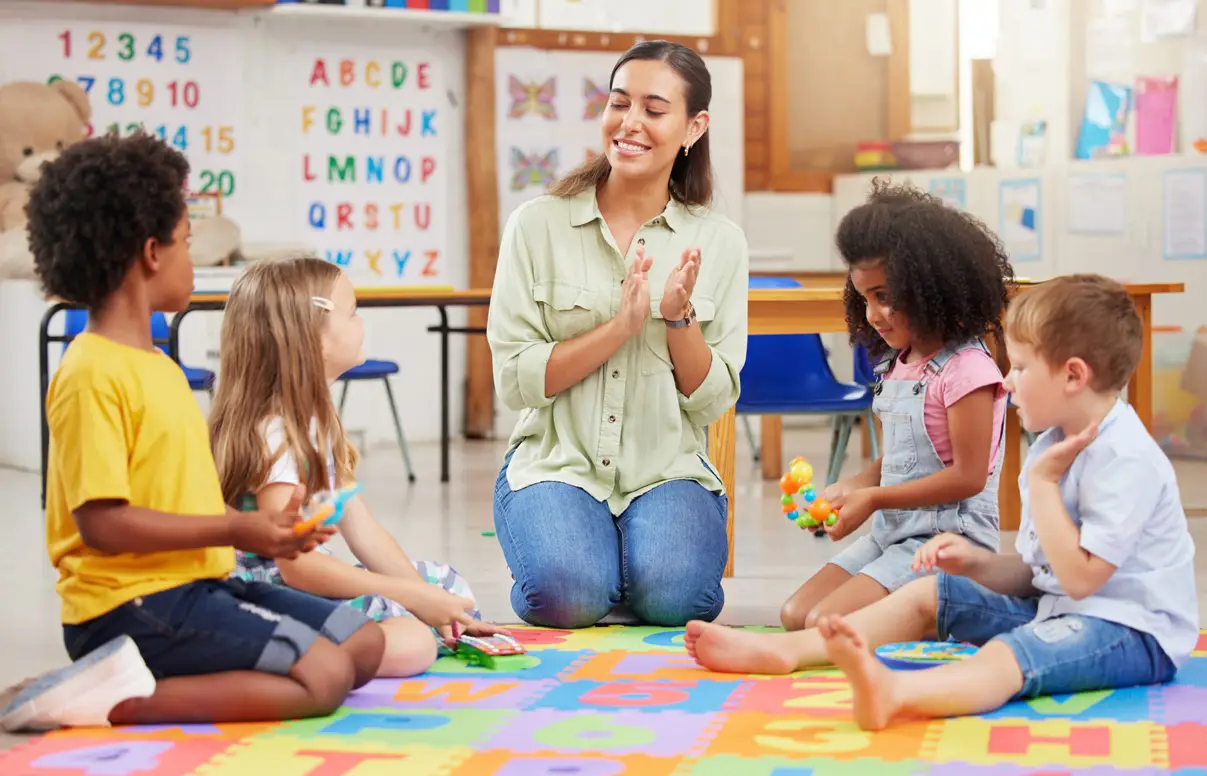
Notice the wording. Not plays with — notices. At this age most children play alongside one another rather than together, and that is exactly right for two and a half. What you want to see is interest: watching what another child is doing, copying it, hovering nearby. Genuine cooperative play usually arrives closer to four.
5. She can manage part of her own self-care
Pushing her arms into a sleeve, pulling off her own chappals, washing hands with help, drinking from an open cup, feeding herself with a spoon even if half of it ends up on the floor. Preschools do not expect independence. They expect participation — a child who tries, rather than one who waits to be done to. Nearly all of it rests on hand control, and that builds through ordinary play: here are twelve fine motor activities you can do with what is already in your kitchen.
6. She can stay with one thing for a few minutes
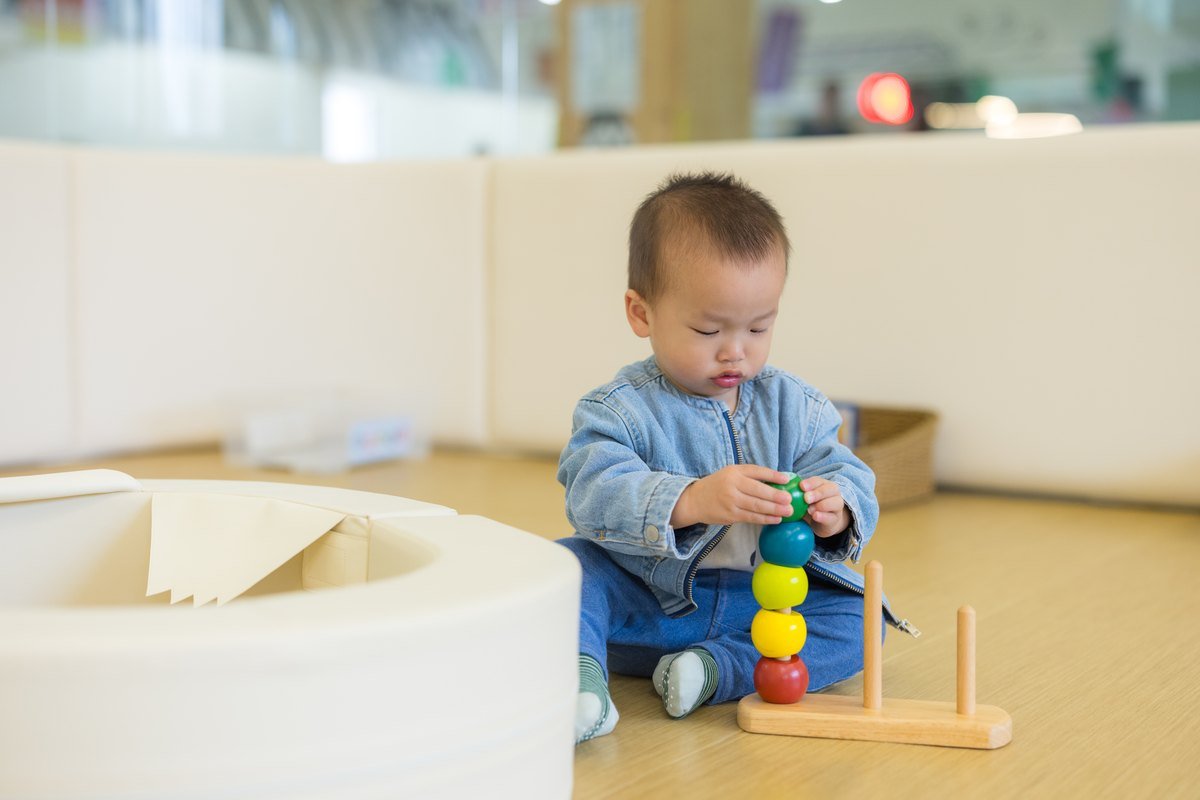
Five minutes with a stacking toy, a picture book, or a pile of vessels from the kitchen. Attention at this age is short and that is developmentally correct; what you are looking for is that it exists at all, and that she can sink into something without an adult continuously steering her.
7. She can come down from a frustration
The tower falls, the biscuit breaks, the toy goes to another child. She will be upset. The question is whether, with a calm adult nearby, she gets back to herself in a few minutes. Nobody expects a two-year-old to regulate herself alone — this is a skill that still needs borrowing from an adult, and will for years yet.
What not to worry about
A great deal of preschool anxiety attaches itself to things that genuinely do not predict how the year will go.
- Letters and numbers. A child who cannot recite the alphabet at three is not behind. Preschool teaches this; it does not assume it. Early rote knowledge is a very poor predictor of later school performance, and chasing it tends to cost the play that actually builds the brain.
- Toilet training. Ask your school what they require, because policies differ. Many nurseries in India are entirely comfortable with a child who is mostly there and occasionally not. Rushing this in the weeks before a start date usually sets it back.
- Shyness. A slow-to-warm child is not an unready child. Some children watch from the edge for three weeks and then join in fully. That is a temperament, and it is a perfectly good one.
- Speaking mainly Tamil at home. Children pick up a school language remarkably quickly when they are immersed in it, and keeping the home language strong helps rather than hinders. Do not thin out Tamil at home in order to prepare for an English-medium classroom.
- Being the youngest. Within the first year or two, the gap between the oldest and youngest in a class closes far more than parents expect.
- Crying on day one. Or week one. Settling is a process, not a test, and the children who cry loudest at drop-off are frequently the ones playing happily by half past nine.
How to prepare in eight weeks
If there is a start date on the horizon, this is a gentle sequence that works. None of it requires buying anything.
Weeks 1–2: practise leaving and coming back. Short, cheerful, predictable separations — twenty minutes with thatha, an hour with a neighbour. Always say goodbye rather than slipping away, and always come back when you said you would. You are not teaching her to cope without you; you are teaching her that you return.
Weeks 3–4: move the clock. Shift wake-up, breakfast and nap gradually towards the school timetable, fifteen minutes at a time. A child who is exhausted by ten in the morning will struggle with a day she would otherwise have managed easily.
Weeks 5–6: hand over small jobs. Let her carry her own water bottle, put on her own shoes badly, open her own snack box. It will take three times as long. Do it anyway — this fortnight is where sign five comes from. Keep narrating and asking as you go: the ordinary loop of serve and return is still the thing quietly doing the construction work.
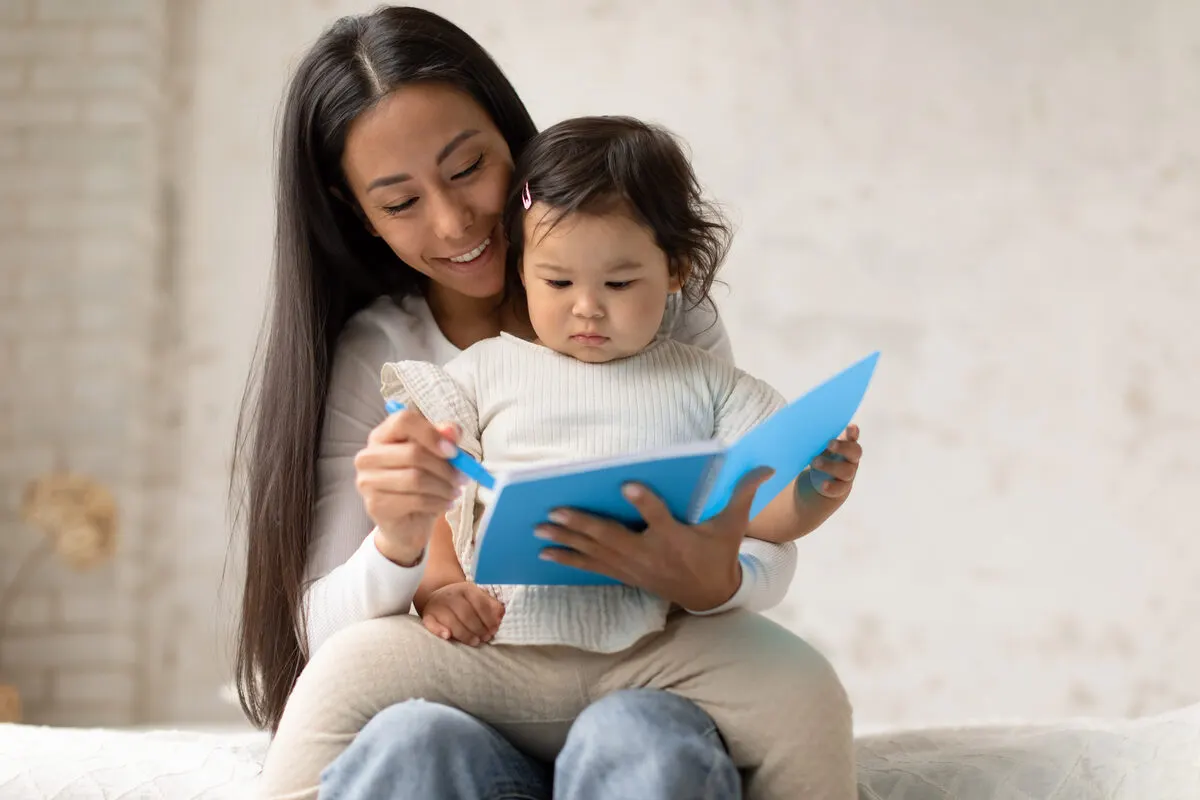
Weeks 7–8: make the school real. Walk past the gate. Name the teacher. Read the same few books about starting school until she is sick of them. Play it — you be the child, let her be the teacher. Children handle far better what they have already rehearsed in a game.
If you would rather follow a structured play plan through these weeks than assemble one yourself, our programmes are built around exactly this kind of everyday, at-home activity, matched to where a child actually is.
The long view
A preschool readiness checklist is genuinely useful for one thing: it moves the question away from is my child good enough and towards what is my child already doing. Those are very different questions, and only the second one has anything you can act on.
If your child is still under thirty months, the work of Brainy Early Years is happening right now, in the ordinary hours — and the readiness you are looking for in a year’s time is being built in them. Brainy Indigo Connect is the thread that keeps that journey connected, so nothing quietly gets lost between one stage and the next.
And if something has been nagging at you — a child who does not seem to hear you, who has very few words, who does not look up when her name is called — that is worth a proper look rather than another month of wondering. Not because something is wrong, but because knowing beats guessing. Develop the brain first. Everything else follows.
Not sure where your child stands? Take the free Child Development Snapshot — a few minutes, no jargon, and you can download this preschool readiness checklist alongside it: brainyindigo.in/child-assessment