
If your baby arrived early, you may have noticed that the world seems to reach them differently. A doorbell can make them startle and stiffen, a bright tube light can make them squeeze their eyes shut, and an afternoon of passing from one loving relative to the next can end in a baby who simply cannot settle. Premature baby sensory development follows its own timetable, and once you understand it, those moments start to make sense. They are not signs that something is wrong. They are your baby telling you how much the world they can take in right now.
This guide to premature baby sensory development explains why preterm babies process sights, sounds and touch differently, how to read your baby’s signals, what kind of gentle stimulation suits each stage of corrected age, and how to fit sensory play into a busy, loving Indian home. It is not medical advice and it will not diagnose anything. It is here to help you feel confident about what helps, what is too much, and what can safely wait.
Why premature baby sensory development follows its own path
In the last weeks of pregnancy, a baby’s brain grows faster than at almost any other time. Inside the womb, sensory input arrives softly: light is dim and warm, sounds are muffled, and movement is gently rocked by the mother’s body. A baby born early meets the full brightness, noise and handling of the outside world before their brain was expecting it.
In premature baby sensory development, the senses do not all mature at the same pace. Touch develops first, then the sense of movement and balance, then taste and smell, then hearing, and vision comes last. That is why many preterm babies find a calm hand on the tummy soothing long before they can enjoy looking at a colourful toy. It also explains why the same activity can delight a full-term baby and overwhelm a preemie of the same birth age.
This is where corrected age matters. If your baby was born eight weeks early, a three-month-old may be closer to one month in sensory terms. We covered corrected age in detail in our guide to preterm baby development milestones, and the same thinking applies to premature baby sensory development: meet your baby where their brain is, not where the calendar says they should be.
The Harvard Center on the Developing Child describes how brains are built through “serve and return”, the back-and-forth between a baby and a responsive adult. For preterm babies, the most important part of that exchange is often noticing when your baby is asking for a pause.
Reading your baby’s cues: calm vs overwhelmed
Your baby cannot tell you “that is too loud”, but their body says it clearly. Learning these signals is the single most useful skill a parent can build to support premature baby sensory development.
Signs your baby is calm and ready to engage
- Relaxed arms and legs, hands open or loosely curled
- Steady breathing and even skin colour
- Bright, focused eyes that settle on your face
- Soft, smooth movements and quiet alertness
Signs your baby needs a break
- Looking away, closing the eyes or turning the head
- Splayed fingers, arching the back or stiff arms and legs
- Hiccups, yawning, sneezing or frowning during play
- Colour changes, fussing, or suddenly falling into a deep sleep
When you see these stop signals, lower the stimulation rather than adding more. Dim the light, stop talking for a moment, and hold your baby close with a firm, still hand. Many babies settle quickly once the input drops. With practice, you will start to see the early signs, such as a yawn or a glance away, before your baby reaches tears.
A useful rule of thumb: offer one sense at a time. If you are singing, keep your face still. If your baby is gazing at a picture, keep your voice quiet. Layering sound, movement and colour all at once is what tips many preterm babies over the edge.
Gentle stimulation by corrected age
Every baby is different, and premature baby sensory development rarely follows a neat schedule, so treat these stages as a loose guide rather than a checklist. Always follow any specific advice from your NICU team or paediatrician.
Before term (still in the NICU or newly home)
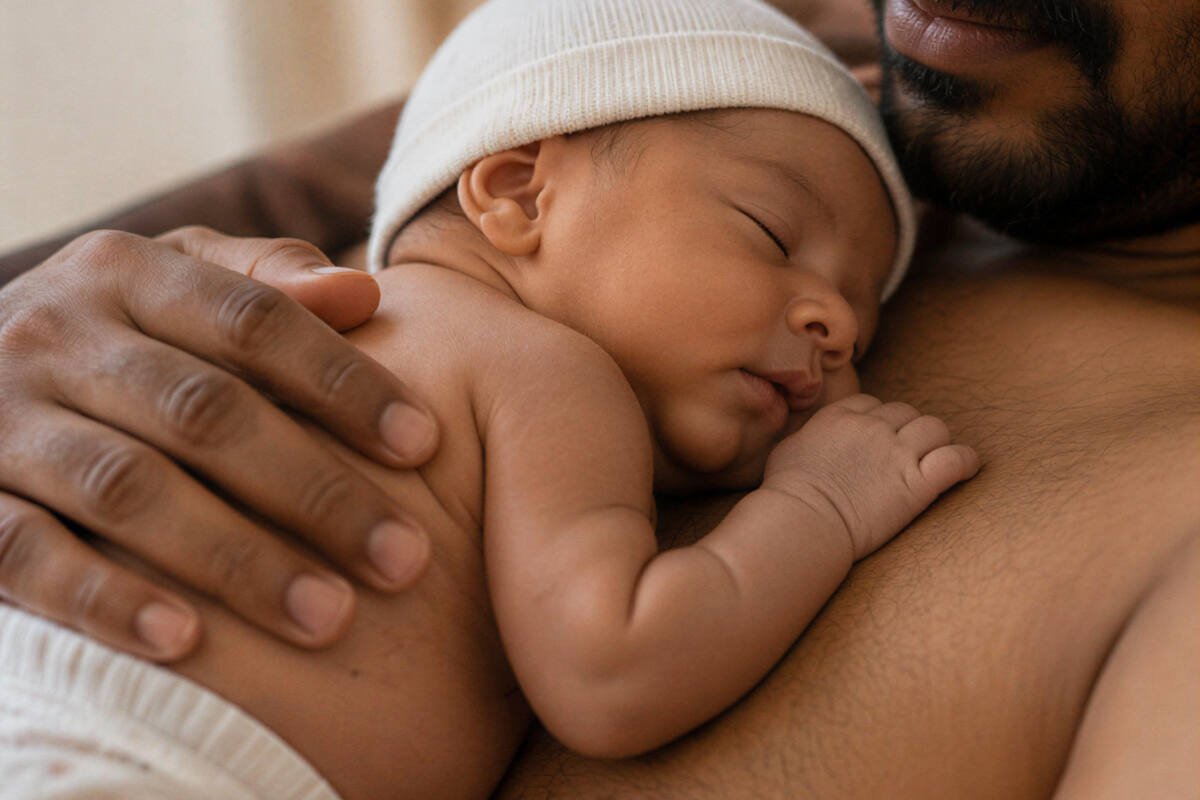
Think “womb-like”. Skin-to-skin holding, a hand resting gently on your baby’s head and tummy, soft humming and dim light are usually all a very young preterm baby needs. If you have not already, read our guide to kangaroo care for premature babies; it is one of the best sensory gifts you can give.
Around 0–3 months corrected
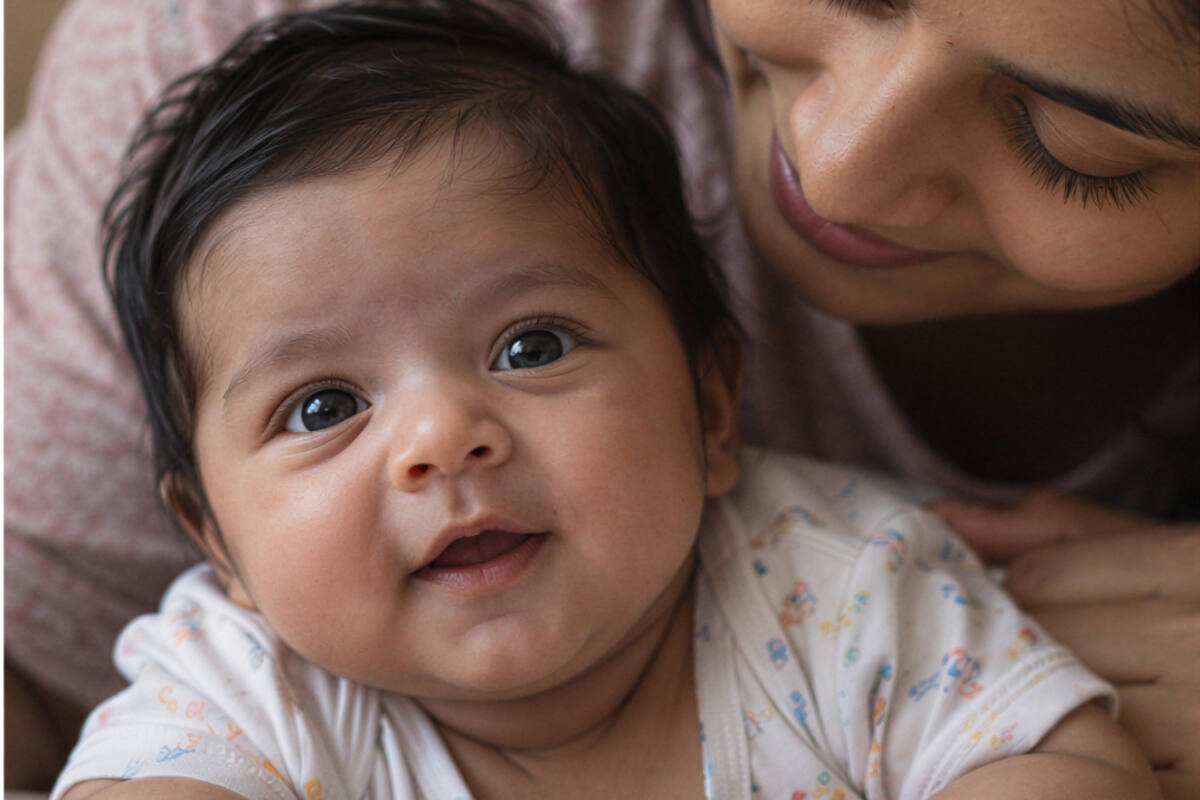
Your face is the best toy. Hold your baby about 20–30 cm from your face and let them study you. Simple black-and-white cards with bold shapes can capture attention for a few seconds at a time. Talk slowly, pause, and wait for small responses like a widening of the eyes or a mouth movement. Short sessions of a few minutes, followed by rest, are plenty.
Around 3–6 months corrected
Your baby can usually handle a little more. Introduce gentle textures (a cotton towel, a soft muslin, a smooth steel bowl), slow rattles, mirror play and short, supervised tummy time. Our tummy time guide has ideas for starting small.
Around 6–12 months corrected
Now sensory play becomes exploration. Babies enjoy banging, mouthing, dropping and watching things fall. Many of the ideas in our list of brain-building activities for babies work well here, adjusted to your baby’s corrected age and energy levels.
Sensory play for preemies: 5 simple ideas for a busy home
You do not need special equipment to support premature baby sensory development. Most of the best sensory experiences for a preterm baby are already in your kitchen and cupboards.
- Touch: a soft cotton saree pallu brushed gently across the feet, a cool steel tumbler held against the palm for a second, or a gentle oil massage when your baby is calm and your doctor has said it is fine.
- Sound: one quiet song at a time, a familiar lullaby in Tamil or whichever language your family speaks, or the soft clink of a steel spoon in a bowl. Turn the television off during play.
- Sight: your face in natural window light, a black-and-white card, or a single brightly coloured cloth moved slowly from side to side.
- Movement: slow, rhythmic rocking in your arms or a gently swaying thottil, rather than fast bouncing or tossing.
- Smell: your own skin and clothes. Keep strong agarbatti, perfumes and kitchen tadka smoke away from a young preterm baby.
If you would like ready-made, age-matched ideas, the Brainy Early Years packages pair each stage with simple play materials and a short explanation of what each one builds.
When the whole family wants a turn
In many Indian homes, a new baby means a steady flow of visitors, each one eager to hold, kiss, sing and show the baby around the house. This love is a real gift. It can also be a lot for a preterm baby’s still-developing senses. It is completely fine to set gentle limits, for example: one visitor holding the baby at a time, quieter voices near the cradle, no passing the baby from lap to lap, and a calm, dim room for naps. You might say, “The doctor told us small babies like quiet visits. Would you like to sit with them while they sleep?” Most grandparents are happy to help once they understand the reason.
Signs it’s working
Gentle support for premature baby sensory development rarely produces overnight changes, but over weeks you may notice:
- Longer stretches of calm, alert time
- Your baby settling more quickly after being upset
- Steadier eye contact and following your face as it moves
- Reaching towards objects, or calming to a familiar song or voice
- More predictable sleep and feeding routines
These small changes are your baby’s brain organising itself, one gentle experience at a time. If you notice that your baby stays very hard to settle, seems unusually floppy or stiff, does not respond to sounds, or does not look at faces by a few months of corrected age, mention it to your paediatrician or NICU follow-up team. Asking is never overreacting. Many parents also find it reassuring to look at the Child Development Snapshot to see the bigger picture at each stage.
Premature baby sensory development: common questions
Is it possible to overstimulate a premature baby?
Yes, and it is very common. Preterm baby stimulation works best in small doses: one sense at a time, short sessions, and plenty of rest. If your baby looks away, splays their fingers, hiccups or starts to fuss, that is their way of asking for a pause, not a sign that anything is wrong.
When should I start sensory play with my preterm baby?
Gentle sensory experiences, such as skin-to-skin holding, a calm voice and a steady hand, can begin from the very first days, including in the NICU when your care team agrees. More active play, such as textures, rattles and mirrors, usually fits better from around three months of corrected age.
Will my preemie catch up in sensory development?
Many preterm babies do catch up over the first two years, especially when parents follow their cues and keep experiences calm and predictable. Premature baby sensory development simply takes its own route, and corrected age is the fairest way to measure progress along it.
Above all, trust yourself. You are already the most important source of comfort in your baby’s world. Watching closely, slowing down when they ask, and offering one gentle experience at a time is exactly the kind of support a preterm brain thrives on. As we like to say at Brainy Indigo: develop the brain first, and everything else follows.
Looking for gentle ideas for your baby’s stage? Explore age-matched activities in the Activity Library.