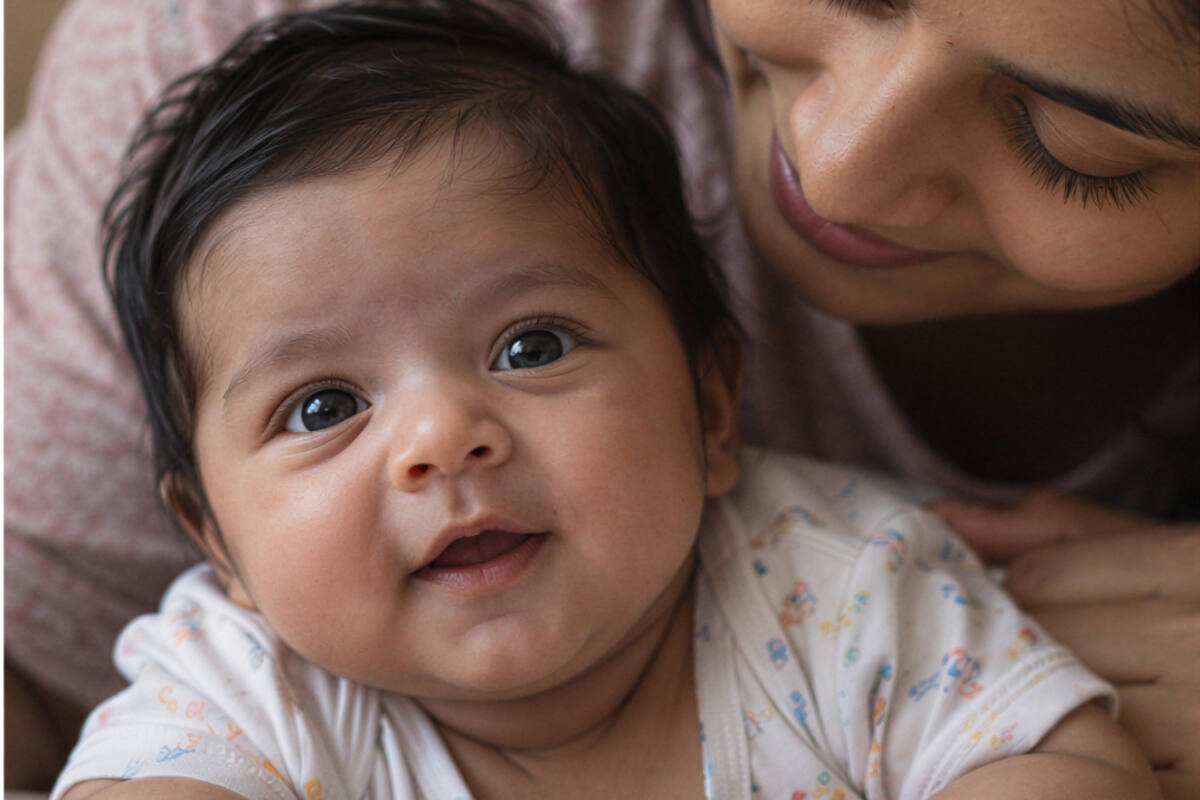
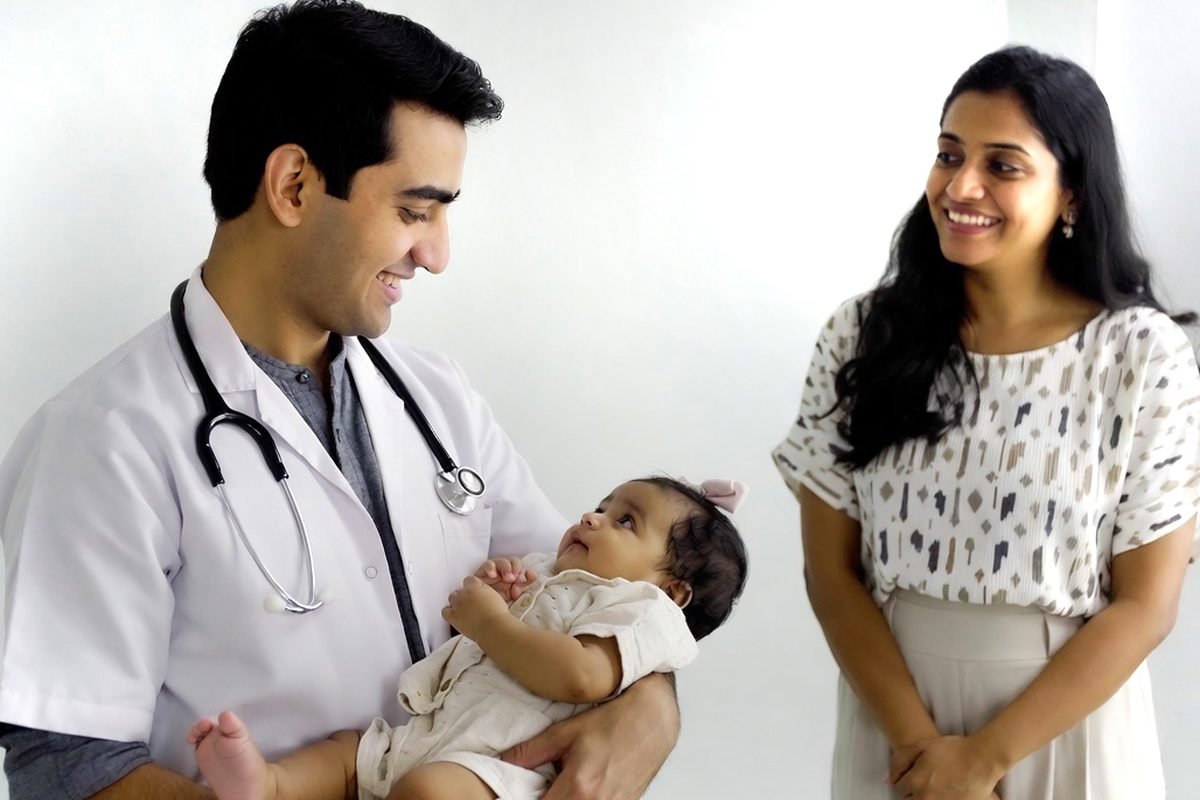
If you have ever left a paediatrician’s clinic with a happy, healthy baby and a quiet question in your mind — but is she developing the way she should? — you are not alone. Developmental screening for infants exists for exactly that question. It is a short, friendly look at how your baby is learning to move, communicate, play and connect, and it is now finding its way into hospital child programmes across India. This guide explains what it is, what it is not, and why hospitals are starting to offer it.
A reassuring note before we begin: screening is not a test your baby can fail, and it is not a diagnosis. It is a way of replacing “I wonder” with “now I know.”
Health check-ups and developmental clarity are two different things
Most of us are good at the health check-up routine. Weight, length, head circumference, vaccines, a quick listen to the chest. These visits tell us that a baby is growing well and protected from illness, and they matter enormously.
What they usually cannot tell us, in a ten-minute slot, is how the brain is developing: whether your baby follows faces, how she uses her hands, what sounds she is trying out, how she reacts when you leave the room and return. These are the early building blocks of movement, language, thinking and emotion, and they unfold across the first two years at a pace that is easy to miss when you see your child every day.
Think of it this way. A growth chart tells you how big your baby is. Developmental clarity tells you how she is learning. Both belong in a complete picture, and until recently only the first was routine for most families.
What developmental screening for infants actually involves
Screening is non-clinical and gentle. There are no needles, no scans and no scary equipment. Typically it includes:
- A conversation with you. You know your baby best. A trained professional asks about what your baby does at home — how she plays, how she communicates, how she settles, how she feeds.
- A structured checklist or questionnaire matched to your baby’s age (using corrected age for premature babies), covering movement, hands and play, language and understanding, and social-emotional connection.
- Simple observation. A few minutes of watching how your baby responds to a toy, a voice or a smile.
- A clear, kind summary. Where your baby is flourishing, what to nurture next, and — only if it is useful — whether a closer look from a specialist would help.
Most families finish a screening feeling lighter. For the majority of babies, the answer is simply “she is on track — here is how to keep supporting her.” For a smaller number, the screening gently points out an area that would benefit from extra support, and that is good news too, because it arrives early, when the brain is most responsive. If you want a calm walk-through of the whole process, our guide to developmental screening in the first six years goes step by step.
It is also worth knowing that screening is different from an assessment or diagnosis. Screening asks, “Is everything progressing as expected?” An assessment, done only when needed by a specialist, asks, “What exactly is going on and how do we help?” Most babies never need the second step. Guidance from the American Academy of Pediatrics and the CDC’s overview of developmental monitoring and screening recommends structured screening at specific well-child visits in the first three years, such as around 9, 18 and 30 months, on top of ongoing everyday observation.
The first 24 months: why timing matters
The first two years are the busiest period of brain building in a person’s whole life. Researchers at Harvard’s Center on the Developing Child describe how, in the early years, more than one million new neural connections form every second. Those connections are shaped by everyday experiences — the “serve and return” of smiles, sounds and touch between a baby and the people who love her.
This is why the first 24 months are often called a window of opportunity. The brain is not “closed” afterwards — children keep learning for life — but support offered early tends to be easier, gentler and more effective than support offered later. A Tamil proverb says it well in spirit: it is easier to bend a young sapling than an old tree.
And here is the reassuring part for parents: the best “intervention” for most babies is not clinical at all. It is the ordinary rhythm of home — tummy time on a mat, songs from a grandmother, a game of peek-a-boo, a story at bedtime. Screening simply helps you know where to focus. If you are curious about the foundation of that movement, our article on tummy time for babies is a good place to start, and our month-by-month milestones guide shows what typical progress looks like.
Why hospitals now offer developmental screening
Hospitals are, for most families, the first and most trusted door into a child’s life. A baby is born there, vaccinated there, and returns for check-ups for years. It is a natural place for developmental screening to sit alongside the health care parents already use. Several things are pushing hospitals in this direction:
- Parents are asking. Families today read, compare and worry — often in the middle of the night, on a phone. They want a trusted, in-person answer rather than a forum thread.
- Paediatricians are short on time. A busy clinic cannot spend half an hour on every baby’s development. A structured programme gives doctors a dependable place to refer to.
- Early support changes outcomes. Hospitals see first-hand how much easier it is to help a child when concerns are noticed in the first two years.
- Families stay connected. A programme that follows a child across the early years gives hospitals a meaningful, long-term relationship with the families they serve.
It is a quiet shift: development is joining growth and immunisation as something a good hospital looks after. Hospital teams interested in how this works can read more on our page for hospitals.
How a hospital developmental programme works
The details differ from one hospital to another, but a well-designed programme usually follows a simple, parent-friendly path:
- A first look. Around the time of routine visits, a developmental screening gives a baseline picture across movement, communication, thinking and social-emotional skills.
- A personalised plan. Parents receive simple, age-matched activities to do at home — using ordinary things like a steel bowl, a soft cloth or a favourite song.
- Regular follow-ups. Because babies change so quickly, the screening is repeated through the first thirty months so progress is tracked, not guessed.
- Support if needed. If something deserves a closer look, the hospital team can guide families to the right specialist without delay or drama.
That is the thinking behind Brainy Early Years, a structured journey that helps families understand and nurture development from the first days through the early years. Brainy Indigo Connect is the thread that keeps the journey connected, so what parents notice at home, what a screening shows and what comes next all stay part of one continuous story rather than scattered notes in different files.
What parents can do right now
You do not need to wait for a programme to start paying attention. A few simple habits make a real difference:
- Write down what you notice. A few lines a week — new sounds, new movements, new favourite games — will make any future conversation with a doctor far richer.
- Use corrected age if your baby was born early. Count milestones from the due date for the first two years or so.
- Ask at your next visit. Simply say, “Can we talk about her development, not just her growth?” Most paediatricians welcome the question.
- Talk, sing and play. Language and brain connections grow through back-and-forth with people who love your baby. Tamil, English or both — every word counts.
- Trust your instincts, and trust the process. If something is on your mind, asking early is never an overreaction. It is simply good parenting.
Common questions about developmental screening for infants
At what age should my baby be screened?
Informal watching starts from the first weeks. Structured screening is usually done at routine visits in the first two to three years, and earlier if you or your doctor have a question. If your baby was born early, ask for the checklist to be matched to corrected age.
Is a newborn developmental assessment the same as screening?
Not quite. A newborn developmental assessment in the hospital looks at reflexes, feeding and alertness in the first days. Developmental screening follows how skills such as movement, language and play are growing over the following months and years, which is why it is repeated.
Will screening label my baby?
No. Screening is not a diagnosis and it does not put a label on your child. It simply shows where your baby is doing well and where a little extra encouragement, or a closer look from a specialist, might help.
Do I have to go to a hospital for it?
Not necessarily. Many families begin at their paediatrician’s clinic or through a child development programme at a hospital they already trust, and keep supporting development at home in between.
Clarity is a gift, not a verdict
Developmental screening for infants is not about finding fault. It is about giving parents, doctors and families the same clear picture of how a little brain is growing, early enough to nurture it well. That is why more and more hospitals are bringing it into their child health services — and why parents who experience it often say they wish they had known sooner.
Develop the brain first. Everything else follows. If your baby was born at a hospital you trust, the simplest next step is to ask them about it.